


September 8, 2026
Why Brands Are Replacing Photoshoots With Creators
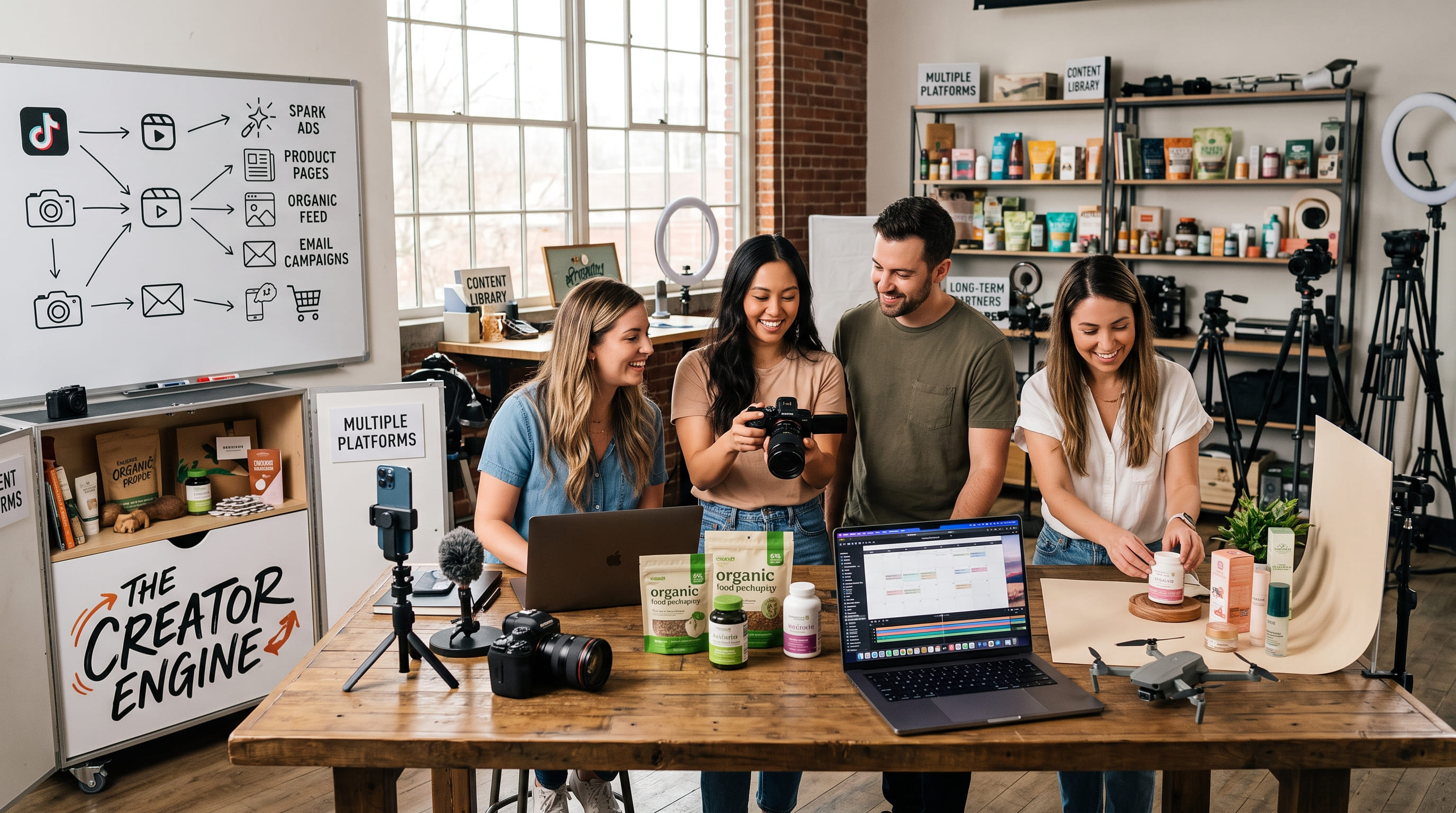
Build A Creator Engine
For years, the influencer playbook stopped at a single post. Agencies would book a creator, get the deliverable, and then move on to the next name on the list. The post did its job for a week or two, then it sat there as an asset, used once, in one place. Consumer brands are stepping away from that model now, and what's replacing it looks less like a media buy and more like infrastructure.
Instead of isolated posts, brands are building ongoing creator networks with groups of creators in longer-term relationships who keep producing content that gets used everywhere at once: organic social, paid ads, TikTok Shop, product pages, even email. One relationship, feeding five channels, for months instead of a single moment. That's the real shift, and it's changing how brands think about what a creator budget is even for.
From One-Off Assets To A Content System
The old approach treated creator content like a vending machine. Insert a budget and then receive the post. But a single Reel or TikTok has a short shelf life, and once it's posted, the brand owns nothing beyond that one piece of content. There's no library to pull from, no raw footage for a paid ad test, no product-page imagery that actually looks like it belongs to the brand's world instead of a generic catalog shoot.
Utilizing a creator engine flips that. Brands are signing creators into longer arrangements with retainers, ambassador programs, revenue-share deals through TikTok Shop's affiliate ecosystem, and in exchange, they get a pipeline. Footage gets repurposed as Spark Ads. Product shots replace the sterile e-commerce photography that never converts as well as something with a real hand holding the product. Email campaigns pull from the same well instead of commissioning separate graphics. It's the difference between owning a single photo and owning a whole archive.
Founders Are Turning Into The Best Case Study
Some of the most convincing proof of this shift isn't coming from brand marketing decks. It's coming from the founders who used to be the creators.
Autumn Calabrese and Good Mood Brew
Autumn Calabrese spent years building a public following inside the fitness industry before she started Good Mood Brew, and her path says something important about where this is all heading: the audience trust a creator builds over years doesn't disappear once they start a company. It becomes the company's most valuable asset. When Calabrese talks about the language people use to describe their own experiences and how carefully that language should be chosen, it's a reminder that the tone a brand takes on isn't incidental, it's the product of years spent learning how an audience listens. Good Mood Brew is one example of what happens when a creator's voice and a brand's identity are the same thing from day one, rather than something a marketing team tries to bolt on later.
Marise May and Chas Organics
Marise May, co-founder of Chas Organics, offers a different but equally telling version of this. Keeping every fair trade commitment intact when shipping costs spiked overnight, figuring out the real economics of getting onto shelves at Costco and Erewhon, and funding elephant conservation work in Sri Lanka. You may think none of that is "content" in the traditional sense. But it's the kind of founder story that, told consistently over time by someone who lived it, generates more trust than any single sponsored post ever could. That's the raw material a creator engine is built on: real stories that can be cut a dozen different ways and still land, because they're true every time.
Both conversations were pulled from in-depth interviews Sebastian Naum Leon, Go Global's founder, sat down for with Calabrese and May. Worth a watch or listen if you want the fuller story behind either brand.
What This Means For Brands Building Content Now
Brands have a decision to make about how they plan content going forward. Keep booking one-off deliverables and hope each post performs, or start investing in fewer, deeper creator relationships that can feed every channel at once. The second option takes more coordination up front. It also builds something that compounds: a content library, a recognizable voice, creators who understand the brand well enough to represent it without a script.
The brands that stand out won't be the ones with the biggest single campaign moment. They'll be the ones who never stopped showing up, because they built the engine to make that possible.
This is the kind of shift Go Global has been helping wellness and CPG brands navigate for a while now by moving them from campaign thinking to system thinking, and connecting creator relationships to every part of the funnel, not just the feed.