


November 4, 2026 • Updated November 24, 2026
TikTok Growth Strategy 2026: Scaling CPG, Beauty & Wellness Brands from Stores to Social Commerce
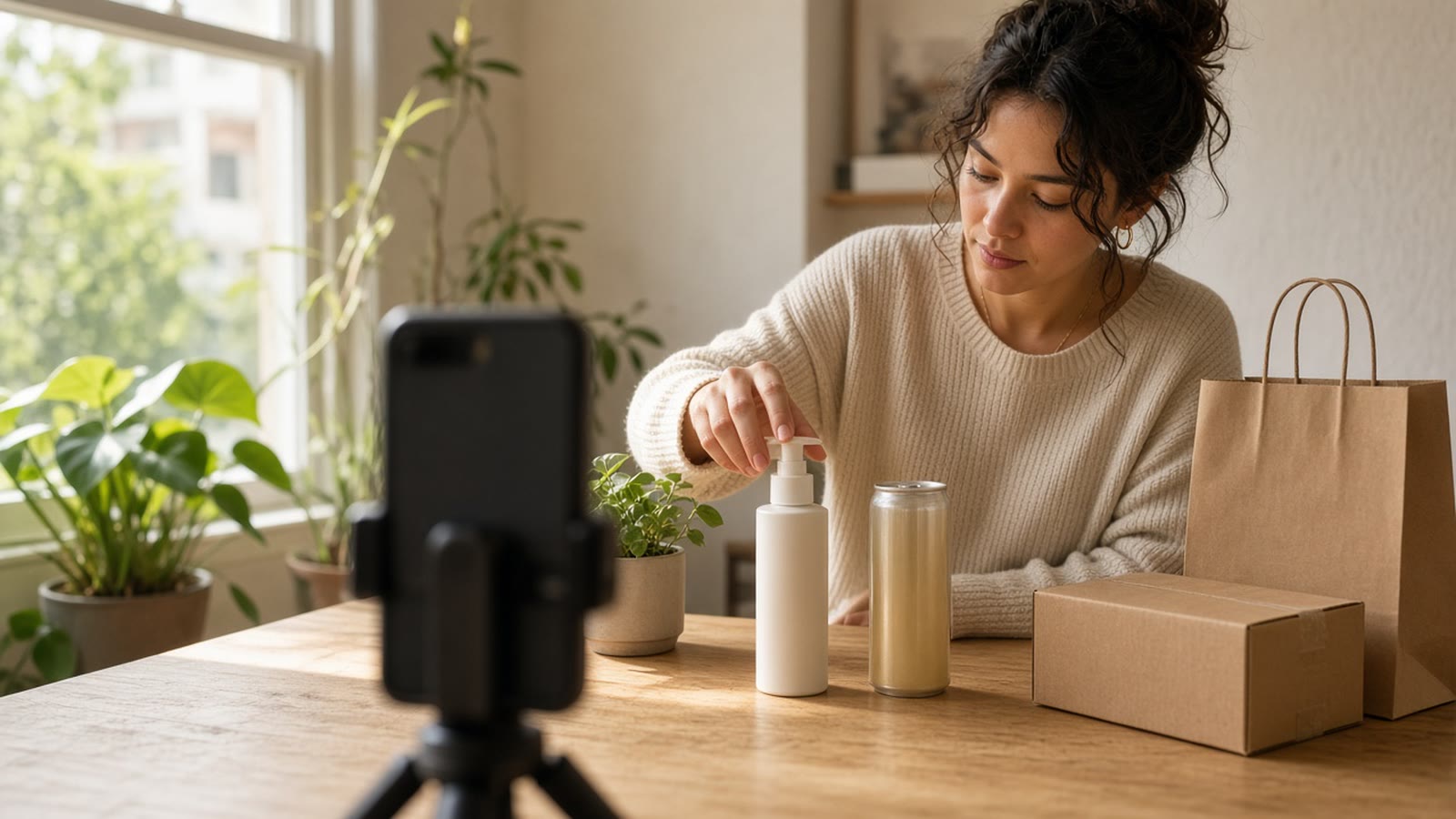
A competitor’s video makes the product look easy to buy, and someone on the team asks for a TikTok growth strategy. For a CPG, beauty, or wellness brand that already lives on a shelf, that request is easy to mishear. The work is not a content calendar. It is the distance between a store and a feed where a creator can show the product and a shopper can buy it.
CPG TikTok marketing in 2026 still starts with a product a person can explain on camera. A beauty brand TikTok strategy has the same shape, with a tighter rule about claims. A wellness brand adds one more: the routine has to stay inside what the label is willing to say. None of those plans scale TikTok sales by posting more and hoping the shelf, the listing, and the warehouse keep up.
At Go Global Agency, TikTok growth for CPG brands connects creator content, Shop setup, affiliates, and paid amplification. This article is the sequence we use when the brand is retail-first and social commerce is the next channel, not the first one. If you are still deciding whether to open the Shop, start with the TikTok Shop readiness checklist. The guide to UGC agencies for CPG brands covers how that content gets made once the offer is real.
2026 TikTok algorithm shifts: creator authenticity and commerce
The feed has been moving toward two things at once: a creator who sounds like a person, and a way to buy that sits next to the video. That is the practical meaning of a TikTok growth strategy for 2026. Authenticity is not a tone of voice you add in the edit. Commerce is not a link you paste into a caption after the video is done.
Creator authenticity shows up as a specific use. A snack has an occasion. A serum has a step in a routine. A wellness drink has a time of day. The creator can say what the product is for without borrowing a claim from a different category. Polished brand films still have a job on a website. They are a weak substitute for the person who already uses the thing.
Product demos still matter, because a shopper has to see what the product does. The stories that travel are narrative-led: how someone found it, why they tried it, and what they do with it on an ordinary day. That shape matches how many Gen Z shoppers meet a product offline first, then look for proof. The video should feel like that second look, not like a brand film with a link added in the caption.
Commerce integration means the video and the place to buy agree. The pack on camera is the pack in the listing. The price, the size, and the promise match. TikTok has been prioritizing in-app commerce, which is why a plan that stops at views leaves the sale somewhere the shopper may never go. Our TikTok Shop work for Shopify consumer brands treats the listing, the creator, and paid support as one path.
None of this is a ranking formula. Platforms change the weights. What does not change for a retail brand is the order of operations: a product someone can demonstrate, an offer you can fulfill, and a creator who will not outrun the label.
Trust with Gen Z: UGC, micro-influencers, and store-to-social proof
Gen Z shoppers often meet the product in someone else’s routine before they meet the packaging. Trust is the gap a beauty brand TikTok strategy has to close. A logo in the corner does not close it. A person who can show the use, and who is close enough to the audience that the routine looks borrowed from real life, does more of that work.
User-generated content, in the way briefs use the term, is commissioned product content that still has to look like a person made it. It is not an unsolicited review, and it should not be labeled as one. The guide to UGC agencies for CPG brands covers how to judge sourcing, rights, and volume. The piece on UGC, influencer marketing, and paid social separates the asset you own from the audience you are renting.
Smaller creators matter here because the audience is near the habit. A micro-creator who already films a morning routine can hold a cleanser without turning it into a spectacle. Reach is not the first filter. The first filter is whether the person can say the allowed sentence and show the real product. Go Global’s creator work is built around that filter: people chosen for the category and the use, then coordinated one to one, rather than a blast of samples with no brief.
On this site, micro-influencer means a creator in roughly the 10,000 to 100,000 follower range. Choose them for the stores and cities you already sell in, not for a national follower count. Useful user-generated content often starts with customers who already bought the product in a store. Ask for that moment, with permission and a clear usage right, rather than rebuilding the aisle on a set.
Store-to-social proof is the retail version of the same idea. The bottle in the video is the bottle on the shelf. The claim in the caption is a claim the pack already makes. A shopper who sees the product in a store after seeing it in a creator’s hands should not feel they have met two brands. That continuity is the trust. An in-store QR code can point from the shelf to a TikTok moment that shows the product in use, or from a creator’s video back to the fact that the product is in a specific store. The code is a bridge. It only works if the page or the video on the other side matches the pack the shopper is holding. CPG TikTok marketing that ignores the store ends up teaching the wrong product.
The retail bridge: TikTok Shop and the store as one offer
Online-to-offline, for a brand that already has doors, is not a stunt that sends people across town for a code. It is a decision that the Shop and the store are selling the same thing, to a shopper who may use either path.
A useful bridge has four checks:
- The creator shows the pack a shopper will recognize in the aisle.
- The Shop listing names the same size, shade, or flavor the store carries.
- Location-tagged content, so a video is clearly from a city or neighborhood where the product can actually be found.
- An “available in-store” call to action when that is true, naming the kind of store rather than inventing a door you do not have.
- A store conversation can become the next hook, because the objection was real.
- A Shop order does not consume stock the retailer was promised.
Exclusive online-only bundles are a separate decision, not the default. Use one when you can explain it in a sentence, fulfill it, and keep it from looking like the store is out of date. If you cannot, sell the same offer in both places.
Sampling sits in the middle. A sample that reaches a creator is a production input. A sample that reaches a shopper in a store is a trial. They answer different questions, and they should not draw from a pile nobody is counting. When the bridge works, a video can point a person toward a store, and a week on the shelf can tell you which demonstration is worth filming again.
Category changes the bridge. Food and beverage need an occasion and a pack that survives shipping. Beauty needs shade, texture, and a claim you can stand behind. Wellness needs the routine without a health promise the product has not earned. The comparisons for beauty and CPG, food and wellness, and consumer brands on TikTok Shop go further on how to choose a partner. This article stays on the strategy those partners should be asked to run.
Measurement frameworks for perception, orders, and attribution
Multichannel CPG does not give you one clean number. A TikTok growth strategy that pretends otherwise will scale the wrong thing. Split the read in two, and keep both.
Perception is what people take the product to be. You hear it in the words they repeat, the questions they ask, and whether a second creator can explain the use without a new script. It tells you whether the brand is legible. It does not tell you the order was profitable.
Conversion is the path you can see: a Shop order, a visit that reaches the site, a retail movement you can actually tie to the week you were in market. Follow the trail from the video to those outcomes. Do not treat the trail as exact. A person can see a creator, buy in a store three days later, and never hand you a click. A person can also buy in the Shop because of a discount, not because of the story.
Before you spend more to scale TikTok sales, baseline three measures and keep them separate across the Shop and the store. None of these is a target copied from another brand.
- Engagement rate on the content you are willing to repeat: your own before-and-after on the same offer.
- Cost per acquired customer, once you can say which orders you are counting and which costs sit inside the number: content, commission, samples, fees, and media.
- Repeat purchase rate, on the Shop and, where you can see it, in the store. A first order that never comes back is a different result from a product people return to.
Comment sentiment is not a purchase. A foot-traffic note in the same week as a content drop is only a signal if the store can see it and you have a reason to connect the two. Write that down as a hypothesis. Retail point-of-sale belongs in the conversion read only when the retailer shares it. Then name the evidence that would justify spending more:
- The offer is the one you meant to sell, not a bundle invented to force a checkout.
- You can replenish the unit that moved.
- The creator’s claim is still a claim you can publish.
- The cost of the content, the commission, and the fulfillment still leave a reason to continue.
Views explain reach. They are not the decision. The paid social layer belongs on the videos and offers that have already survived that list. Amplifying an unclear product just buys a louder version of the same confusion.
Read California and West LA before a national rollout
A national buy is a poor first experiment for a brand that is still learning how the product behaves in a feed. Go Global reads market signals in California, and in West LA neighborhoods such as Venice, Santa Monica, and Marina del Rey, before treating a result as a reason to deploy the same offer across the country.
That read is qualitative on purpose. West LA concentrates wellness-minded creators and shoppers who adopt a routine early and talk about it in public. A beauty or wellness product can meet that audience at a human scale: a few creators, a store a person can actually visit, a listing you can watch. You learn which sentence people stay for, which pack they recognize, and whether the objection is the price, the use, or the claim.
California is the wider ring around that neighborhood read. It is still not the country. A hook that makes sense next to a coastal routine may need a different occasion somewhere else. The point of the first market is to find that out while the inventory commitment is still a decision, not a warehouse. The West LA creator-led growth guide and the Venice and Marina del Rey agency comparison describe that local context. Use them as the map. Use the national rollout as the later step, after the product, the creator, and the store are telling the same story.
How Go Global approaches the work
Go Global Agency is a Los Angeles team working with food, beverage, wellness, beauty, and lifestyle CPG brands, including international and Latin American brands learning the US shopper. The TikTok practice is a system, not a hope that one video carries the quarter. Creator sourcing, sample coordination, Shop setup, affiliate relationships, and paid amplification are planned as one sequence. Volume comes after a video and an offer are worth repeating.
Creator and influencer marketing is the content and the partnership layer. TikTok growth is where that content meets the Shop. Neither layer promises a sales figure. Product fit, price, inventory, and what a creator is allowed to say still decide the outcome. The useful first conversation is about the constraint in front of you: a product people cannot picture, a listing that disagrees with the video, a store and a Shop drawing from the same uncounted stock, or a market you have not read yet.
Frequently asked questions
What belongs in a TikTok growth strategy for a retail-first brand in 2026?
A creator who can show the product honestly, a commerce path that matches that video, a bridge back to the store, and a way to read both perception and orders. In 2026 that means a narrative a shopper could believe in a store, not a polished brand film with a link added later. A content calendar alone does not do that work. CPG, beauty, and wellness each add a constraint: the occasion, the claim, or the routine.
How should a beauty brand use TikTok if it already sells in stores?
Start with the product a shopper can already find, a claim the label supports, and a creator who can demonstrate the routine. The Shop listing and the shelf should describe the same offer. Read a smaller market before you treat one video as a reason to buy nationally.
Do we need TikTok Shop before we test creator content?
You can learn from content before the Shop is open. You cannot call it social commerce until a shopper can buy. Confirm eligibility, the offer, and fulfillment before you scale. The readiness checklist is the sequence for that decision.
How do you connect TikTok Shop to physical stores?
Keep one offer across the Shop and the shelf. Location-tagged content, an available-in-store call to action, and a QR code to a proof moment can send people between the two. An online-only bundle is the exception, and only when you can explain and fulfill it. Do not let the Shop consume stock a retailer was already promised. Read California and West LA before you treat one video as a national rollout.
How do you measure TikTok when sales also happen in stores?
Keep perception and conversion as separate reads. The language people repeat tells you what the product means. Shop orders, the site, and retail sell-through tell you what moved. Baseline engagement rate, cost per acquired customer, and repeat purchase on your own offer. A comment, a foot-traffic note, and an order are three different facts. Do not treat attribution across those paths as exact, and do not scale a unit you cannot replenish.
Talk through a 2026 TikTok plan for a retail-backed brand
Go Global Agency works with CPG, beauty, and wellness brands that already have a store relationship and want a social commerce path that matches it. Bring the product, the claim you can defend, and the market you are willing to read first.
Start a strategy conversation with Go Global Agency, book a TikTok strategy call, or review TikTok growth for CPG brands.
Key Takeaways
- A 2026 TikTok growth strategy connects a creator who can show the product with a commerce path that matches the video.
- Gen Z trust comes from UGC, including moments from people who already bought in store, micro-influencers near those stores, and proof that the shelf and the feed are the same product.
- Link TikTok Shop to the store with location, an honest in-store call to action, and stock that is not promised twice.
- Read perception and orders separately. Baseline engagement, cost per acquired customer, and repeat purchase before you scale TikTok sales.
- Go Global reads California and West LA market signals before treating a result as a national rollout.
Frequently Asked Questions
- What is the 2026 shift this plan assumes?
- Creator content that sounds like a person, and a way to buy next to that video. It is not a published ranking formula.
- Where should a retail brand test first?
- California, and West LA neighborhoods such as Venice, Santa Monica, and Marina del Rey, before a national deployment.
- What should we baseline before spending more?
- Engagement on the content you would repeat, cost per acquired customer with the costs named, and repeat purchase where you can see it. A foot-traffic note is a hypothesis until the store can connect it to the week you were in market.
- Which related guides should we read?
- The TikTok Shop readiness checklist, the UGC agency guide, and the beauty, food, and consumer TikTok Shop comparisons.