
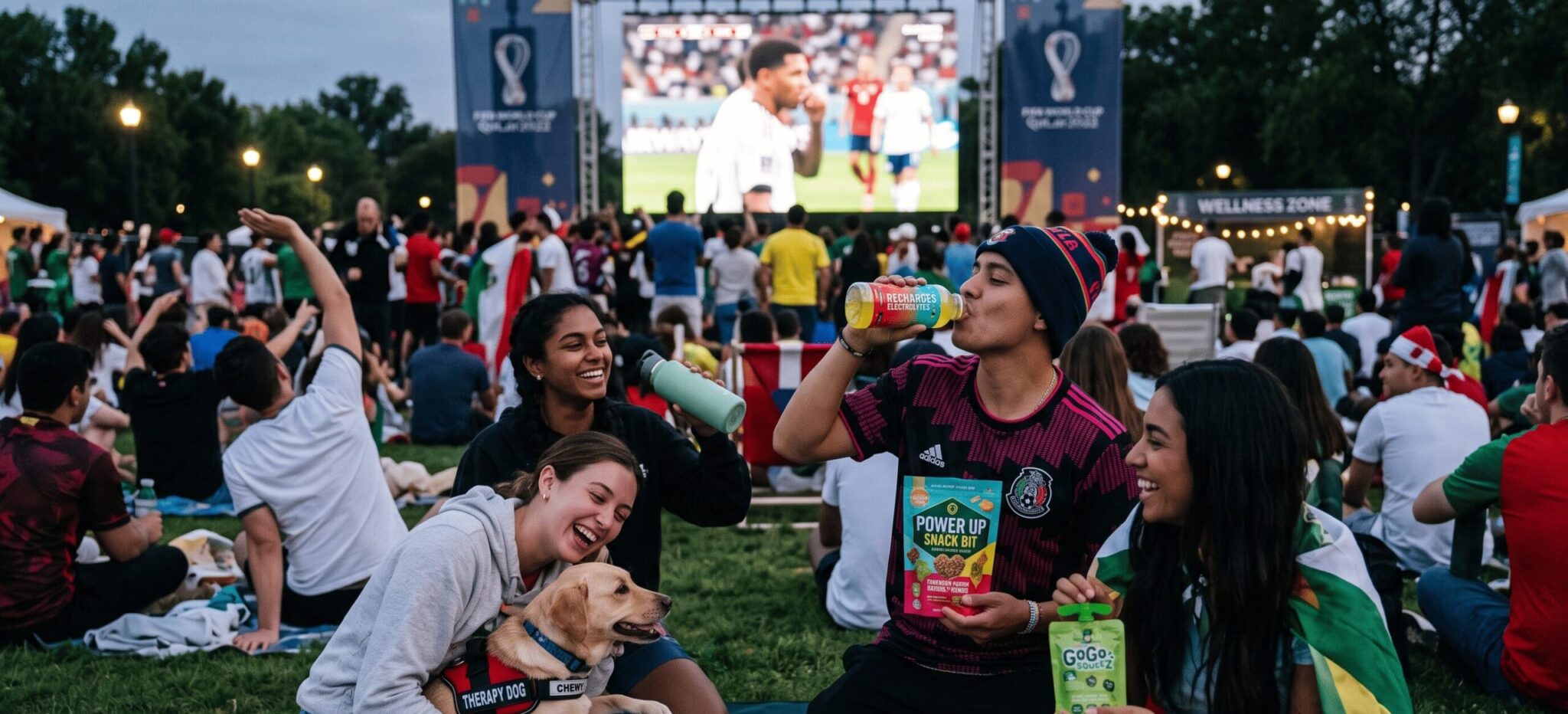
World Cup ads have been dominated by alcohol and fast food for decades. And while those categories still hold a large share of that ad space, this year, wellness brands are starting to take up real room. Hydration rituals, mental health moments, and functional snacking showed up across this tournament in ways that weren’t fringe or forced; they were mainstream, expected, and working. Here’s what’s actually landing, and why it matters well beyond the World Cup.
Hydration is muscling in on the beer aisle
Functional beverage brands leaned hard into hydration-as-performance messaging this tournament, positioning electrolyte drinks and recovery beverages as essential pregame ritual, not afterthought. The framing matters here: this isn’t “drink water so you don’t feel bad.” It’s “hydrate like the players do,” a message that competes directly for the same pregame moment beer has owned for decades. Brands that made hydration feel like prep, rather than a substitute for the fun stuff, saw that messaging travel far better across TikTok and short-form content than anything selling on taste or refreshment alone. That’s a distinction wellness brands can borrow well outside of soccer season.
Mental health is part of the pregame
One of the more unexpected viral moments of this tournament came from Chewy, which brought therapy dogs into fan zones to help people manage the emotional swings of watching a match live. It’s a small activation with an outsized signal that brands are starting to treat pregame nerves and postgame emotional crashes as real, nameable experiences, not just “fan passion.” Gen Z fans are far more willing to say out loud that a match made them anxious, or that they needed a minute to decompress after a loss, and brands that meet that honesty with something tangible (a calming moment, a comfort ritual, a beat of stillness in an otherwise loud environment) are building trust that outlasts the tournament. This is the same principle behind why wellness brands succeed when they treat mental health as part of the product experience, not a campaign topic bolted on for awareness months.
The burger is getting company
Plant-based menus, pre-fuel snacking, and re-fuel rituals built specifically around match schedules have become genuinely normal this summer, not a fringe behavior reserved for athletes. Brands like GoGo SqueeZ leaned into this directly, showing up where fans were already moving between transit and stadiums with fast, functional snacking, essentially treating fans like they were the ones playing the match, not just watching it. It’s not that burgers and beer are disappearing from game day. It’s that they’re no longer the only language brands are using to talk to fans.
What this means beyond the World Cup
You don’t need a World Cup activation to apply this. The underlying shift is bigger than one tournament because audiences, especially younger ones, are bringing an optimization mindset into spaces that used to run purely on indulgence. Game day, girls’ night, holidays, travel. The brands that grow are the ones that show up inside that mindset instead of standing outside of it trying to sell a product into a moment. At Go Global, this is exactly the kind of cultural read we build into content strategy for our clients, because a viral moment tied to a match ends when the tournament does, but the shift in how people think about their own wellness doesn’t. The brands capitalizing on this now aren’t just having a good tournament. They’re building habits into their brand that fans carry with them long after the final whistle.