Our Blog

What the World Cup Is Teaching Brands About Modern Marketing

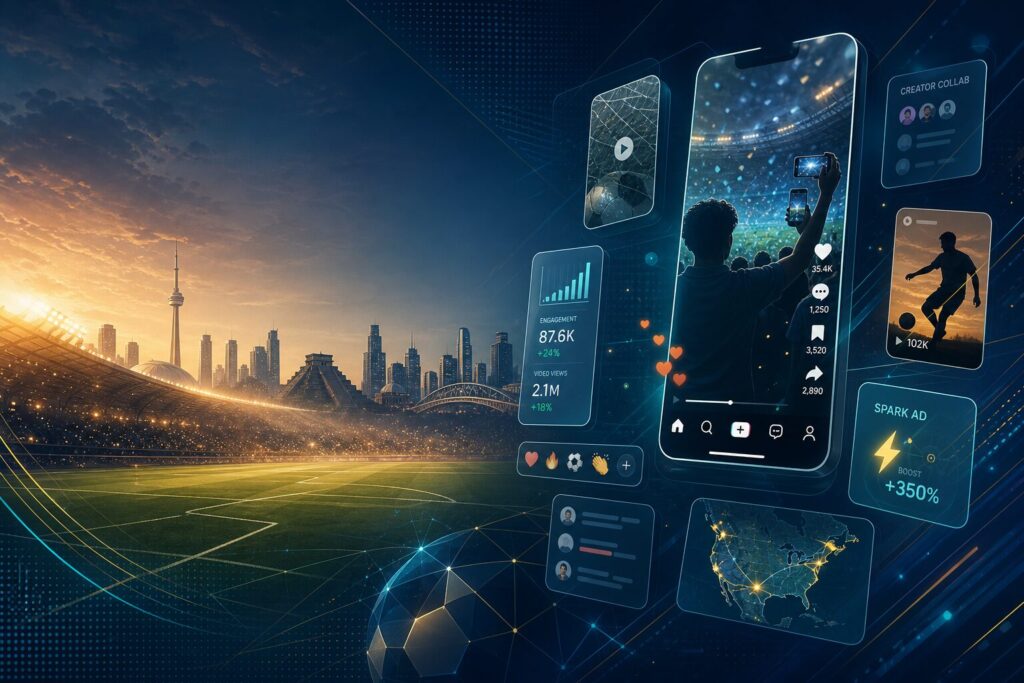
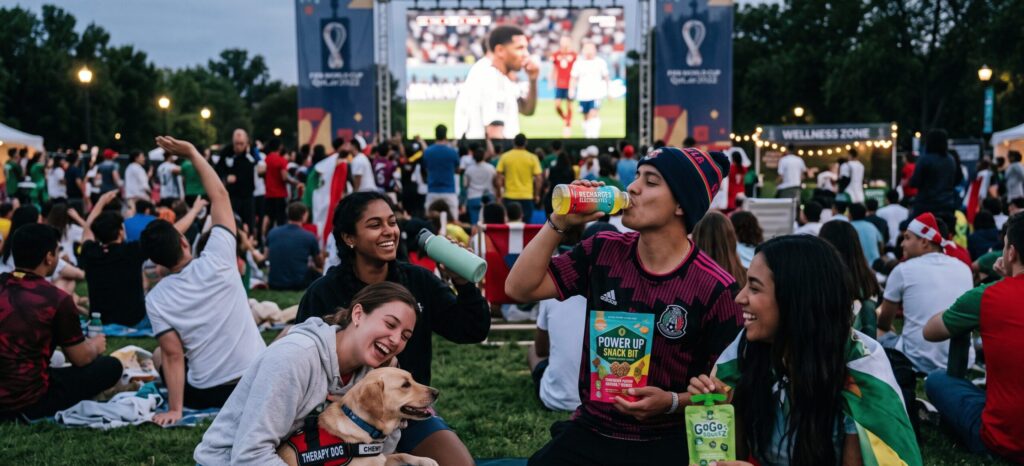
The FIFA World Cup 2026 will kick off on June 11. And before a single match was played, the marketing had already begun. Brands across CPG, beverage, beauty, and retail started rolling out campaigns months in advance, some making their largest investments in soccer to date. The tournament spans 39 days, features 48 teams for the first time, and is hosted across the United States, Canada, and Mexico, making it the most commercially accessible World Cup in history for North American brands. But what’s actually interesting isn’t the scale of the spending. It’s the strategies behind it. Because the brands winning attention right now aren’t just showing up with big budgets. They’re showing up with sharper thinking about audiences, creative, and distribution. And most of those lessons apply directly to CPG and wellness brands, whether or not you have a FIFA sponsorship deal. Creator ecosystems, not one-off influencer deals Adidas skipped the traditional hero film this year. Instead its “Backyard Legends” film broke the internet, featuring Timothée Chalamet, Lionel Messi, Bad Bunny, Lamine Yamal, Jude Bellingham, and Trinity Rodman. The creative is cinematic, but it’s built around a core platform  “You Got This”  that can travel across formats, markets, and moments throughout the entire tournament. One strong idea. Many executions. Extended runway. This is the same model we apply through TikTok affiliate ecosystems for our clients. When you have 50 active affiliate creators running simultaneously, you’re not just generating distribution, you’re running 50 live creative experiments at once. Different hooks, different personalities, different storytelling formats. The data surfaces quickly, and the best-performing concepts feed directly into paid strategy, organic content, and broader brand messaging. The brands doing this well have stopped thinking about influencer marketing as a channel. They’ve started treating it as a creative intelligence system. Emotional resonance at scale Coca-Cola’s World Cup campaign, “Uncanned Emotions,” centered on something specific: the superstitions, nerves, and emotional swings that come with watching tournament soccer with other fans. It’s not about the product. It’s about a feeling the product lives inside. This is the kind of positioning that is embedded in a brand into a shared emotional experience rather than leading with features or benefits. It is something wellness and lifestyle brands often understand intuitively but struggle to execute at scale. The challenge isn’t identifying the emotion. It’s finding the format and the creative approach that makes that emotion feel genuine instead of manufactured. What Coca-Cola is doing with “Uncanned Emotions,” and what Dove Men+Care is doing with immersive “Ritual House” activations in host cities, is essentially the same thing Go Global teaches brands to think about across TikTok and social content: don’t show the product doing a job. Show the moment the product belongs in. That distinction sounds simple. It changes everything about how content performs. The second screen is the real playing field Here’s a number worth pausing on: 93% of fans say they will second-screen during matches. That means the majority of the World Cup audience will be scrolling while the game is happening. The real competition for attention isn’t on the pitch, it’s in the feed. TikTok recognized this early. FIFA confirmed TikTok as its first-ever preferred platform for the 2026 tournament. That’s not a minor detail. It signals where live cultural moments are increasingly being processed, reacted to, and shared. For brands, this creates a real opportunity that doesn’t require official sponsorship. Reactive content, behind-the-scenes creator moments, real-time commentary tied to match outcomes, are all surfaces that perform well when brands have the infrastructure to move quickly. This is exactly where Spark Ads become a critical tool. When an organic post from a creator or affiliate gains traction in real time, the ability to immediately amplify that post with paid spend, without rebuilding creative from scratch, is a meaningful competitive advantage. You’re not betting on untested content. You’re scaling what already proved it could hold attention. Speed and system design matter more here than budget size. What non-sponsors can take from this You don’t need a FIFA deal to learn from what’s happening this summer. The underlying playbook being executed by the best World Cup campaigns is applicable to any CPG or wellness brand trying to grow: Know your audience segments well enough to speak to them differently. Build creator relationships that generate insight, not just reach. Find the emotional moment your brand belongs in and build creative around that moment. Design your content infrastructure to move fast when organic signals appear. The World Cup is a once-in-four-years event. The marketing principles it’s surfacing aren’t. At Go Global, we help brands build the systems and strategies that make this kind of thinking operational, not just inspirational. Because a good framework doesn’t stop being useful when the tournament ends. The brands that grow are the ones that take what works in peak moments and build it into how they operate year-round. Let’s talk!

Read More »

Smart Ways to Create Content at Scale

The brands winning attention right now aren’t necessarily creating better content. They’re creating more relevant content, more consistently, across more surfaces. The problem is that most companies still approach content like isolated campaigns instead of building systems around them. That model breaks fast. Teams burn out, production slows down, and creative quality drops the moment volume increases. At Go Global Agency, we’ve developed a proven framework to scale content generation based on years of execution across influencer marketing, paid media, TikTok Shop, affiliate ecosystems, and organic social. The system wasn’t built in theory. It was shaped through real campaigns, performance data, and constant iteration across multiple brands and industries. Here’s what’s actually working right now. AI should remove friction, not creativity Most brands are using AI backwards. They’re asking it to replace creativity instead of removing friction around creativity. The biggest bottlenecks in content production usually aren’t the ideas themselves. It’s everything around them: rewriting hooks, resizing formats, adapting videos for different platforms, creating variations, captions, or edits. That’s where AI creates real leverage. A strong piece of content still needs human instinct, taste, and point of view. But once the creative direction is clear, AI becomes an accelerator that helps teams move faster without losing consistency. The best workflows today are hybrid: human-led strategy supported by systems that reduce repetitive execution work. Don’t reinvent the internet every time One of the biggest mistakes brands make is assuming every piece of content needs a completely original structure. In reality, the internet already tells you what formats people engage with. The smartest content teams constantly study patterns across TikTok, Reels, Shorts, and Meta: hooks that hold attention, editing rhythms, storytelling formats, camera framing, product demos, interview styles. This isn’t about copying content. It’s about recognizing behavioral patterns that already work and adapting them to your own brand. At Go Global, part of our framework involves tracking emerging creative formats and identifying which structures consistently outperform. Sometimes the biggest unlock isn’t inventing something new. It’s adapting an existing format to a new audience before the rest of the market catches up. Great content teams don’t just create. They observe. TikTok affiliate is massively underused TikTok Shop’s affiliate ecosystem is one of the most scalable growth engines in e-commerce right now, and most brands are barely scratching the surface. The model is simple: creators promote your products and earn commission on every sale they generate. But the real power isn’t just distribution. It’s creative testing at scale. A brand with 50 active affiliates is essentially running 50 live creative experiments at once. Different creators test different hooks, personalities, formats, and storytelling angles. Within days, TikTok’s data starts revealing what actually resonates. At Go Global, we often treat affiliate ecosystems not only as a sales engine, but also as a live creative lab. The best-performing concepts frequently end up shaping paid ads, organic content, landing pages, and broader brand messaging. Most companies still think influencer marketing is about hiring creators. The smartest brands are building creator ecosystems. Spark Ads changed the game One of the most important shifts in social commerce is the rise of Spark Ads. When an affiliate video performs organically, you amplify that exact post with paid spend instead of building entirely new ad creative from scratch. That changes the economics completely. You’re no longer betting on unproven creative. You’re scaling content that already demonstrated engagement in the wild. This is also why our influencer and paid media teams at Go Global work closely together instead of operating separately. The feedback loop between content performance and paid amplification has become too important to ignore. One idea should become many assets Another major shift is thinking in ideas instead of individual posts. One strong concept should travel across platforms. A founder interview can become a TikTok, a Reel, a LinkedIn post, a paid ad, an email, or a blog article. The idea stays consistent. The format adapts to where it lives. This is how high-volume content becomes sustainable. You stop rebuilding from zero every day and start compounding output from stronger core ideas. Content at scale is really about systems The brands scaling fastest right now aren’t necessarily producing the most content. They’re building systems that allow strong ideas to move further, faster, and across more channels. At Go Global, we believe the future belongs to brands that can combine creative instinct with scalable infrastructure. The opportunity isn’t just creating more content. It’s building an engine that continuously generates insights, creative variations, distribution opportunities, and performance improvements over time. That’s how modern brands scale attention without losing relevance. Let’s talk!

Read More »

AI’s biggest advantage is not just content. It’s timing.

The trend with AI in marketing is pretty obvious. More content, more ads, more automation. Faster everything. That works… until it doesn’t. The people actually getting an edge out of AI are not using it to produce more. They’re using it to anticipate behavior. Not reacting to what already happened, but getting ahead of what’s about to happen. Because most setups are still built the same way. Someone clicks, you retarget. Someone buys, you follow up. Someone drops, you push a discount. Everything happens after the signal. And by then, the decision is already in motion. When you actually look at customer data, behavior is rarely random. It’s patterns. Simple example. A customer buys every ~30 days. They tend to come back to the site a couple of days before buying. They open emails but don’t always click. That’s already enough. Tools like Shopify and Klaviyo show you this without doing anything fancy. The shift is just one decision. Instead of waiting for the purchase and then running retargeting, you trigger a message around day 25 to 27. Same product they usually buy, no aggressive discount, just better timing. If you want to go one step further, you adjust the experience a bit. If they’re already a repeat buyer, make the path faster. If they’re coming from a specific creator, align the landing with that angle. Nothing crazy. Just not being late. A quick clarification, because this is where most people get confused. Tools like Shopify and Klaviyo can automatically detect patterns and trigger the right moment to act. That part is fully automated. What’s not fully automated (and shouldn’t be) is the message itself. The way it works best in practice is you define a small set of message angles, often generated or refined with AI, and then let the system decide which one to show based on behavior. It’s not AI inventing a new message every time. It’s AI helping you scale and match the right message to the right moment. Same thing on paid. Platforms like Meta Ads Manager or TikTok Ads Manager don’t magically create winning ads in real time. What you do is generate multiple creative variations, test fast, and let the system push what works. The leverage is not in full automation. It’s in combining good signals, controlled creativity, and fast optimization. Where this gets even more interesting is when you connect it with creativity. Anticipating behavior is not just about when you show up, it’s also about what you show. That’s why platforms like TikTok Ads Manager are so powerful right now, especially with TikTok Shop. The ability to scale creatives quickly, test different hooks, formats, UGC angles, and read performance early gives you clarity on what actually resonates before you commit real budget. We’re seeing a lot of success there scaling creatives fast, cutting what doesn’t work, and doubling down on what does. AI is not really about doing more. It’s about making better decisions, earlier. Let’s talk!

Read More »